A Halal-Aware AI Recipe Generator From Food Photos
How CookThis can adapt food-photo recipes around halal preferences while keeping ingredient checks, uncertainty, and user judgment visible.
By Usama Kashif, founder and lead engineer. Read the full CookThis project context for the product decisions behind this work.
Halal-aware recipe generation requires more than removing pork from an ingredient list.
A sauce may contain cooking wine. A dessert may use gelatin. A pastry may use lard. A photographed meat dish cannot reveal where the meat came from or how it was prepared.
CookThis can help identify common conflicts and generate alternatives, but it does not pretend that a food photograph can certify a dish.
What the Halal Preference Changes
When halal is selected, CookThis can guide recipe generation away from common conflicts such as:
- pork, bacon, and ham
- lard and pork-derived fats
- wine, cooking wine, and alcohol-based sauces
- uncertain gelatin
- ingredients that need a clearly labeled alternative
The recipe can replace a wine reduction with an appropriate stock and acidity combination, suggest a halal-certified gelatin alternative, or avoid an uncertain processed meat.
What CookThis Cannot Verify
An AI recipe generator cannot inspect a supplier, certify a slaughter process, read a label that is not visible, or guarantee that a restaurant avoided cross-contamination.
A food photo also cannot prove whether a glossy sauce contains alcohol or whether a dessert contains gelatin. CookThis should therefore treat the image as evidence for the kind of dish, not evidence of religious compliance.
A Safer Workflow
For a more useful result:
- Select the halal preference before generating the recipe.
- Add context about any known ingredients or restaurant description.
- Review every generated ingredient and substitution.
- Check packaged-product labels and certification where applicable.
- Confirm that meat meets your own requirements.
- Replace anything uncertain before cooking.
This keeps the AI in the right role: reducing recipe work and surfacing possible conflicts while leaving the final decision with the cook.
Real Example: Beef Bulgogi With Halal Preferences
Traditional beef bulgogi marinades often include rice wine or mirin. With halal, no-pork and no-alcohol preferences set, CookThis returned a version with no wine or mirin. The marinade uses soy sauce, sugar, sesame oil, garlic, ginger and grated apple, and the recipe carries visible halal · no-pork · no-alcohol tags.
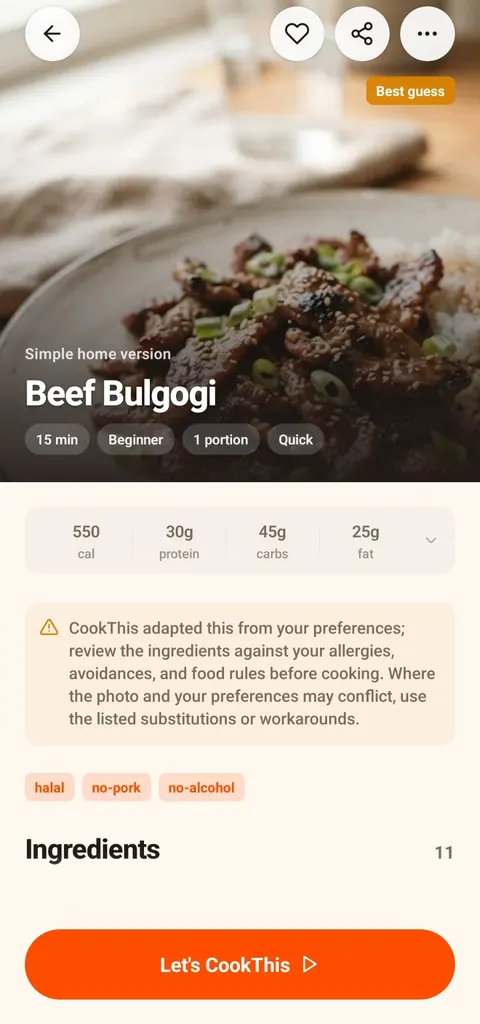
The result reminds you to check ingredients against your own rules.
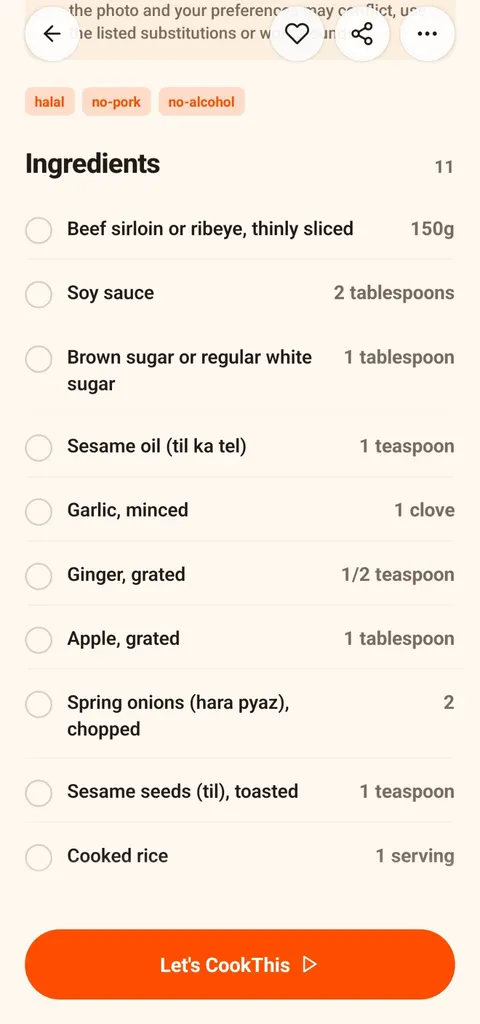
No rice wine or mirin in the marinade.
What the app did not do is certify anything. You still need halal-suitable beef, and you should check the soy sauce label, because some brewed soy sauces contain alcohol or list it as a preservative. The app shows this kind of warning above the ingredients for exactly that reason.
Who This Is For
This use case fits home cooks who want visual recipe inspiration without repeatedly rewriting generic recipes around halal preferences. It is especially useful when the desired dish comes from a restaurant photo, social post, or cuisine where the traditional version may use an ingredient that needs review.
For local ingredient names and substitutions, see the Pakistani ingredients guide. CookThis is free to download on Android, with 3 free credits to try it and a weekly or monthly subscription after that.
Get CookThis on Google Play or view the full project.
frequently asked questions
Can CookThis generate halal-friendly recipes?
Does CookThis certify ingredients as halal?
Can a food photo reveal whether a dish is halal?
related CookThis guides
AI Recipe Generator for Limited Kitchen Equipment
Generate practical recipes around the equipment you actually have, whether that means a stovetop, one pan, an air fryer, or no oven.
How I Built CookThis: An AI Recipe Generator From a Food Photo
A founder's account of building CookThis: how the photo-to-recipe pipeline works, why results are labelled as estimates, and the stack behind the Android app.
AI Recipe Generator for Pakistani and Desi Home Cooking
See a real CookThis chicken biryani recipe generated from one photo, plus how local ingredient names, halal settings, and Pakistani substitutions work.
CookThis: See it. Snap it. Cook your version.
CookThis turns restaurant photos, screenshots, and ingredients into practical home recipes on Android. Free to download with 3 free credits to try it.

