Why I Shut Down My Startup: Lessons From Failing Ravah
By Usama Kashif - frontend engineer and product builder sharing practical product, UX, and engineering experience.
Ravah is shutting down.
There was no dramatic moment when everything broke. No disastrous launch, single terrible decision, or sudden realization that the idea made no sense.
It happened more slowly than that, which made the decision harder.
Ravah started with genuine interest. About 100 people joined the waitlist. Founders on Reddit understood the problem. The product kept improving. The vision became more ambitious and easier to explain.
But none of those things proved that Ravah had become a business.
The short version: I am shutting down Ravah because I validated interest, then kept expanding the product before I had validated repeated need. It taught me that a waitlist is not product-market fit, a bigger vision is not always a better product, and you cannot build your way out of every business problem.
This is the full story of shutting down a startup, the failure lessons I am taking with me, and what I am building now.
What Ravah was supposed to be
The original idea was simple.
Founders constantly create material worth sharing. They ship features, talk to users, change pricing, rethink onboarding, fix mistakes, and learn something new almost every week. Most of it never becomes content because turning raw product work into useful posts takes time and context.
I wanted Ravah to understand a product well enough to help with that work.
Instead of opening an AI chat every day and explaining the product, audience, voice, and latest update from scratch, a founder would give Ravah that context once. Ravah would remember it and help turn real product activity into content for LinkedIn, X, and other channels.
People seemed to understand the idea immediately.
Before the product was properly available, around 100 people joined the waitlist. I posted about it on Reddit and received encouraging responses. People asked for access, offered feedback, and told me they liked the concept.
At the time, that felt like validation.
Looking back, it was validation of interest. It was not yet validation of a product, a habit, or a business.
That distinction became the most important lesson Ravah taught me.
The product kept getting better—and less focused
The first version of Ravah generated content for founders.
Then I decided campaigns would make more sense. A founder might be launching a product, announcing an update, sharing a milestone, or building in public. Ravah could create a coordinated campaign instead of an isolated week of posts.
Then I simplified the idea again: tell Ravah what changed in the product. Ravah would understand the update, decide how much content it deserved, find different angles, and turn it into posts.
That led to a stronger phrase for the vision: product-aware growth.
Ravah would not be another generic AI writer. It would understand the product, remember the audience, learn the founder’s voice, and know what had already been published.
Then distribution entered the picture.
Maybe Ravah could identify the Reddit communities a founder should participate in. Maybe it could find relevant conversations and help write useful replies without making every interaction sound promotional. Maybe it could become a complete founder distribution system.
Later, I imagined connecting the website, changelog, documentation, GitHub, and other product sources. Ravah would detect what changed, create content for multiple channels, schedule it, measure performance, and learn from the results.
Ship → understand → create → distribute → learn.
On paper, every version sounded better than the one before it.
That was part of the problem.
I kept improving Ravah before proving Ravah
I kept asking:
What could Ravah become?
I should have spent much more time asking:
What narrow part of Ravah do people need badly enough to use repeatedly and pay for?
Those questions pull a founder in very different directions.
The first encourages possibility. Every competitor reveals another gap. Every customer suggestion can become a feature. Every improvement makes the pitch sound more complete.
The second question demands evidence. Who has this problem today? What do they do without the product? How often does the pain occur? What happens after the first impressive result? Do they return? Will they pay?
Because I could build the features, building always felt like a reasonable answer.
More context. Better generation. Campaigns. Reddit discovery. Comments. Scheduling. Analytics. Integrations.
The vision became clearer, but clarity about a vision does not automatically move a product closer to product-market fit. Sometimes it only makes the founder better at explaining something customers still do not need enough.
The better experiment would have been smaller: choose one painful workflow, put it in the hands of a few founders, and refuse to expand until their behavior proved it deserved to grow.
Building became a comfortable place to hide
Building is comfortable for me.
There is always productive work available: improve onboarding, clean up the dashboard, tune a prompt, change the model, redesign the landing page, add an integration, or write a sharper positioning sentence.
You can spend months feeling productive because technically you are productive. Code ships. Screens improve. The backlog moves.
But a company does not reward effort in isolation. The market does not care how much code exists. Eventually, only one question matters:
Do enough people care enough to keep using this?
I used product work to delay confronting the business question. Another feature gave me a fresh reason to believe the next version might click. Another redesign made the product feel new again.
This is one reason founder-led product teams can overbuild so easily: building feels like forward motion even when customer evidence is standing still.
The co-founder mistake happened at the beginning
I initially started Ravah with a co-founder. We eventually had differences and went our separate ways.
The lesson is not that founders should avoid co-founders, or that disagreement makes someone a bad person. Priorities, expectations, and ways of thinking can change.
The mistake was earlier: we did not define enough things clearly at the start.
We should have answered questions such as:
- Who owns product, engineering, and growth?
- What result is each founder accountable for?
- What level of contribution does each person expect?
- How will serious disagreements be handled?
- Who has the final decision in each area when agreement is impossible?
These conversations can feel too formal when two people are excited about an idea. You trust each other, want to move quickly, and assume the details can be worked out later.
Later is exactly when the conversations become difficult. By then, pressure exists. Contributions feel unequal. Unspoken expectations have hardened into assumptions. Both people may believe a decision belongs to them.
Clear co-founder roles and responsibilities do not make one founder more important. They stop ambiguity from becoming a third founder.
If I build another company with someone, I will have the uncomfortable conversations while everything is still comfortable.
A waitlist is a lead, not product-market fit
Around 100 waitlist signups felt significant. The positive Reddit response felt even stronger.
Those signals mattered. They showed that I could explain a problem, put an idea in front of strangers, and earn attention. That is useful evidence—but it is top-of-funnel evidence.
This is the validation ladder I use now:
| Signal | What it actually proves |
|---|---|
| Someone says the idea is interesting | The promise is understandable |
| Someone joins a waitlist | They will exchange contact details for possible future value |
| Someone completes onboarding | The promise created enough curiosity to try the product |
| Someone returns repeatedly | The product may solve a recurring problem |
| Someone recommends it | The value is strong enough to attach their reputation to it |
| Someone pays and keeps paying | The product may be important enough to support a business |
Each step is useful, but they are not interchangeable.
I treated early interest as stronger product-market fit validation than it was. What the waitlist really gave me was permission to investigate the problem further. It did not give me permission to assume the business had been proven.
Why I shut down instead of adding one more feature
There is no perfect formula for how to know when to shut down a startup. Closing too early can kill an idea that needed more persistence. Closing too late can consume time that should go into a better problem.
For me, the clearest signal was not a single metric. It was the pattern of work.
Ravah kept producing new versions of the vision, but not stronger evidence of recurring customer need. I could describe the next feature more easily than I could describe the retention behavior that justified it.
I still believe several ideas inside Ravah are valuable:
- AI becomes more useful when it understands real product context.
- Founders often have more useful things to say than they realize.
- Distribution remains a difficult problem for small teams.
- Product updates can become strong raw material for content.
But believing in parts of a thesis is not the same as having a product that deserves unlimited time.
I could keep rebuilding Ravah for another year. There would always be another version in my head that felt like the one. Shutting it down means choosing evidence over that imagined version.
Did Ravah fail?
As the company I wanted it to become, yes.
I failed to turn Ravah into a product people relied on and a business that could sustain itself. I do not want to soften that until the word loses its meaning.
But failure is not the same as waste.
Ravah taught me how to launch before everything was perfect. It proved that strangers can care about something I make. It showed me the gap between building a product and building a business. It made the cost of unclear founder roles real. It taught me that early attention is a signal, not proof.
Most importantly, it taught me this:
You cannot build your way out of every problem.
Sometimes the next step is another customer conversation. Sometimes it is removing half the product. Sometimes it is staying with one boring problem much longer than feels exciting. Sometimes it is ending the thing.
The operating rules I am taking into the next product
Ravah changed how I want to build from here:
- Start with a narrower promise. A small product that proves one recurring need is more valuable than a complete platform built on assumptions.
- Define the evidence before the feature. Decide what user behavior would justify more investment before expanding the product.
- Treat interest as the start of validation. A waitlist creates a group to learn from; it does not complete the learning.
- Spend more time with the problem. Stay close to the workflow, alternatives, frequency, and consequences before growing the solution.
- Make ownership explicit. Every important area needs responsibility, accountability, and a decision process.
- Set reassessment points. Ask whether the product is generating stronger evidence or only a more impressive roadmap.
The outcome is not that I will stop building ambitious products. It is that ambition must be earned in stages.
What I am building now
Closing Ravah does not mean I am done building.
I am currently working on a few focused apps, including:
- CookThis, an AI cooking app that turns food photos, gallery images, ingredients, and supported food links into practical recipes for a real home kitchen.
- ScrollStop, an Android app blocker that protects study, work, exam, and sleep sessions from distracting apps and doomscrolling.
Both products are deliberately more focused. Each starts with a specific moment, a specific user, and a clear behavior that tells me whether the product helped.
I am also open to selected contract work with early-stage teams. I can help turn an idea or rough product into a testable, polished web or mobile experience, especially where the work needs product thinking, frontend engineering, UX, or practical AI integration. Get in touch through the contact section if that sounds useful.
Ending Ravah
This part is still difficult.
I spent a lot of time building Ravah, changing it, researching it, writing about it, and imagining what it might become. Letting go means accepting that time already spent is not a reason to spend more.
So Ravah, as the company I was trying to build, is done.
Some of its ideas may return in a different product. The lessons definitely will.
I will start smaller, define ownership earlier, make fewer assumptions, and demand clearer evidence before expanding. I will respect the distance between people liking an idea and people needing a product.
I failed Ravah.
But Ravah made me a better founder.
For now, that is enough.
Frequently asked questions
Why did Ravah shut down?
Do waitlist signups prove product-market fit?
How do you know when to shut down a startup?
What should co-founders agree on before starting a company?
What is Usama building after Ravah?
Is Usama available for contract product work?
block distractions. protect your focus.
ScrollStop is an Android app blocker for students who want to protect study, work, exam, and sleep sessions without another subscription.
More Posts

How to Build an Expo Native Module with Kotlin for Android
Learn when React Native needs native code and build a local Expo module in Kotlin, using ScrollStop's installed-app picker as a practical Android example.
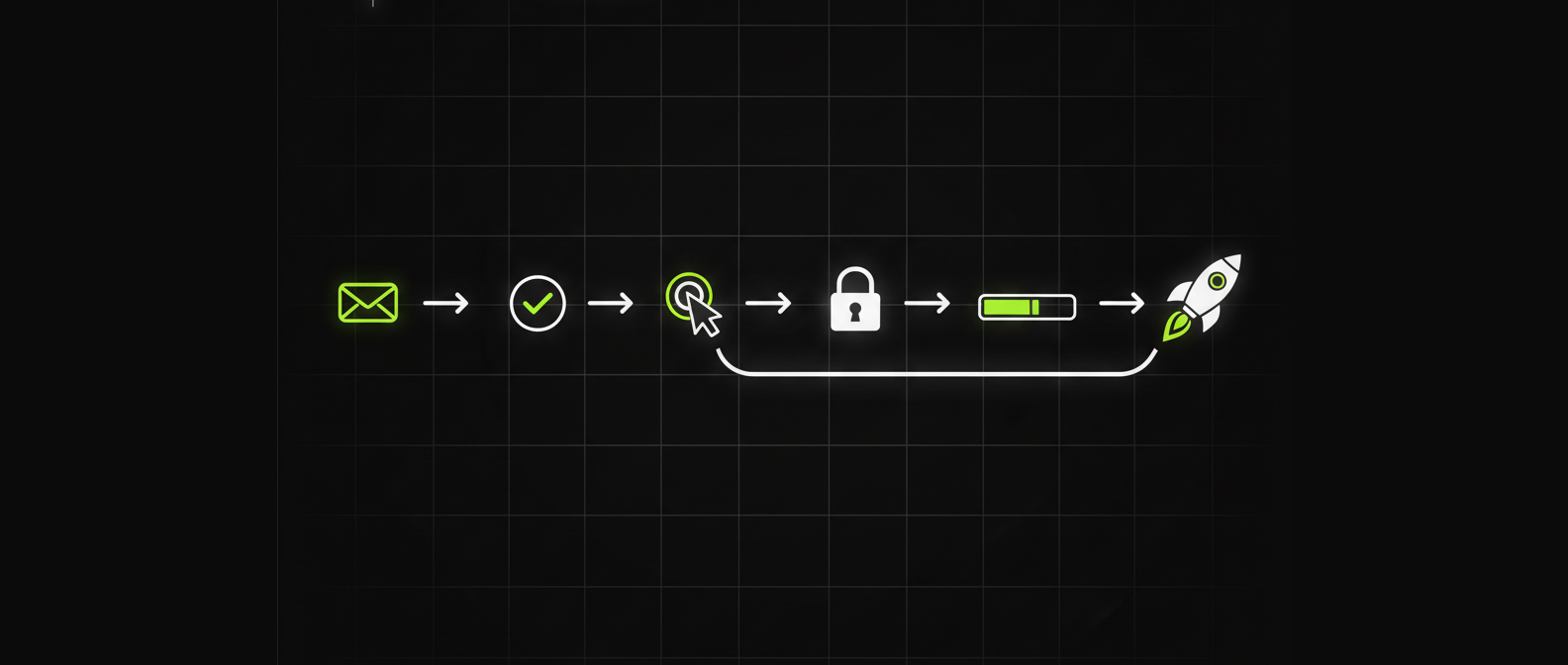
How We Built a Tracked Email Funnel with PostHog + Supabase
Connect PostHog and Supabase to track transactional email from send to onboarding. Resend webhooks, Edge Functions, and a PostHog funnel — without a drip tool.

